I (Crazily) Built a Full-Sheet CNC to Make Some Doors
Most people who need kitchen doors ring a joinery shop and get a quote.
I built a robot.
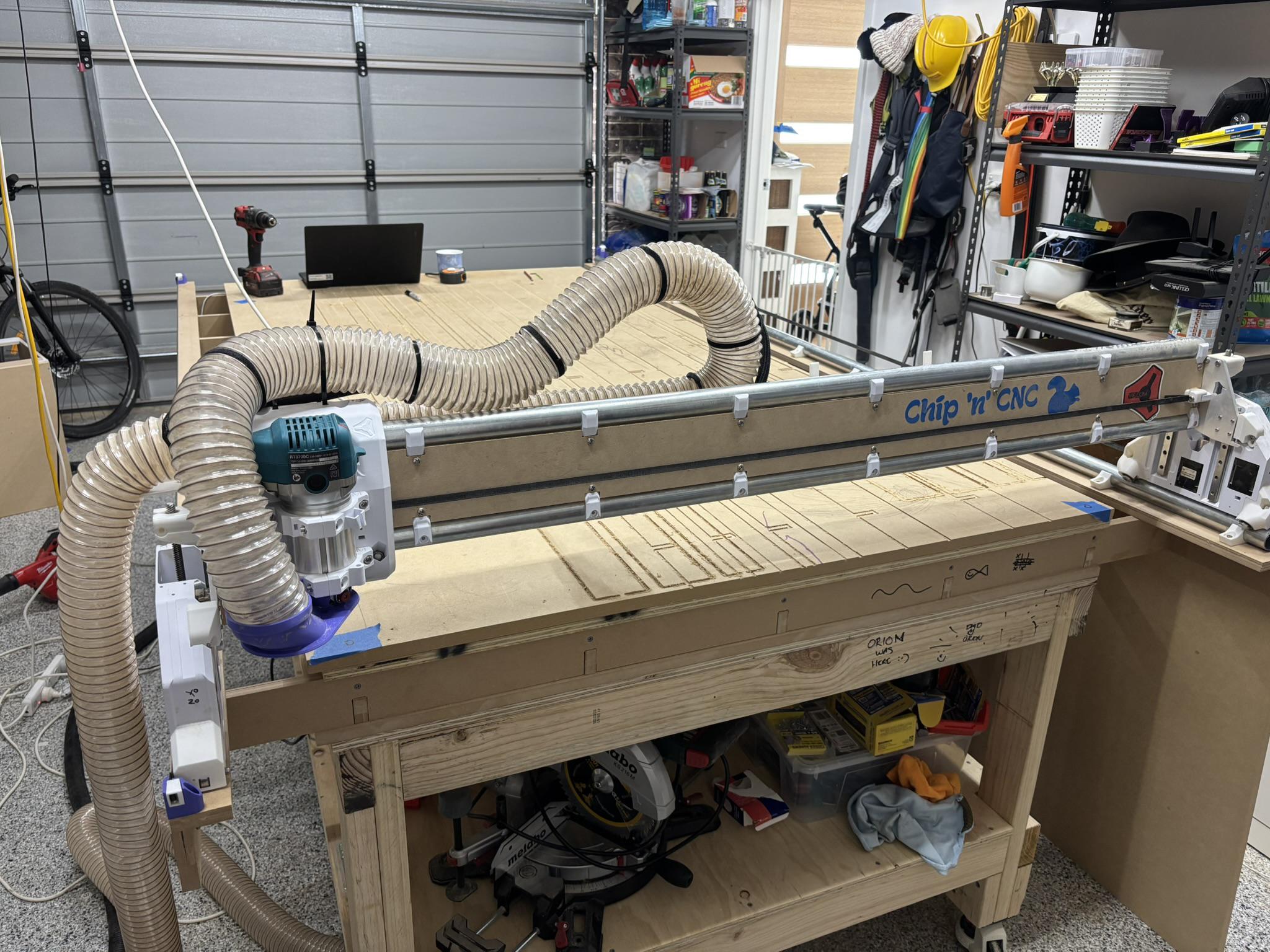
Honestly, why?
The honest reason is to save a lot of cost, the cabinetry quote is high-very-very-high. And the materials quoted aren’t all that great. I want best of the best, without paying insane prices. So I did the math and for around $8k in material costs, $2k for a home-built CNC and an insane amount of my own time and sanity - I can do roughly $100k of joinery for less than $15k myself.
And the result will be high end materials, and flexibility to do whatever I want. I’ve already build a test cabinet carcess and shaker door and it’s turned out great.
The problem
We need shaker doors for the kitchen. A dozen or so rectangles with a groove around the edge.
A sensible person would look at that and think, “I’ll buy those.”
My brain looked at it and thought, “What if I built a 2.4 metre gantry robot that can do anything, ever?”
The solution (allegedly)
Meet the LowRider v4 from V1 Engineering. It’s a CNC router, built using metal pipe and 3D printed parts that rides on rails and cuts a full 2.4 m × 1.2 m sheet in one go, which is great if you ever need to machine an entire sheet of plywood in one sitting. Something I have needed exactly zero times so far.
The specs, for people who enjoy this sort of thing:
- Working area: a full sheet. Every last square millimetre. My doors are about 400 mm wide.
- Brain: a Jackpot3 board running FluidNC. More processing power than the Apollo guidance computer, to carve a groove around a rectangle.
- Muscle: a Makita RT0700CX trim router. It spins at speeds that make the dog leave the room.
- Rails: 31.75 mm stainless tube. Yes, I researched seamless versus welded stainless for a hobby machine. Yes, there was a spreadsheet. No, I won’t take questions.
The software stack
You can’t just tell a CNC to cut a door. That would be too easy.
First you design the cabinet in Mozaik. Then Mozaik needs a post processor to turn the design into G-code the LowRider understands. That post processor doesn’t exist, so I had to reverse engineer and code up my own CNC post-processor. Easy!
The cost-benefit analysis
Before you say anything: I did one. And the robot wins. Making the doors myself works out way, way, way cheaper than paying a joinery shop.
Is that the main reason I built a CNC? Absolutely not. Is it a very handy number to show anyone who asks why there’s a 2.4 metre robot in the shed? Absolutely yes.
And the doors will be mine, each one cut to tolerances that the timber will completely ignore the first time the humidity changes.
Where it’s at
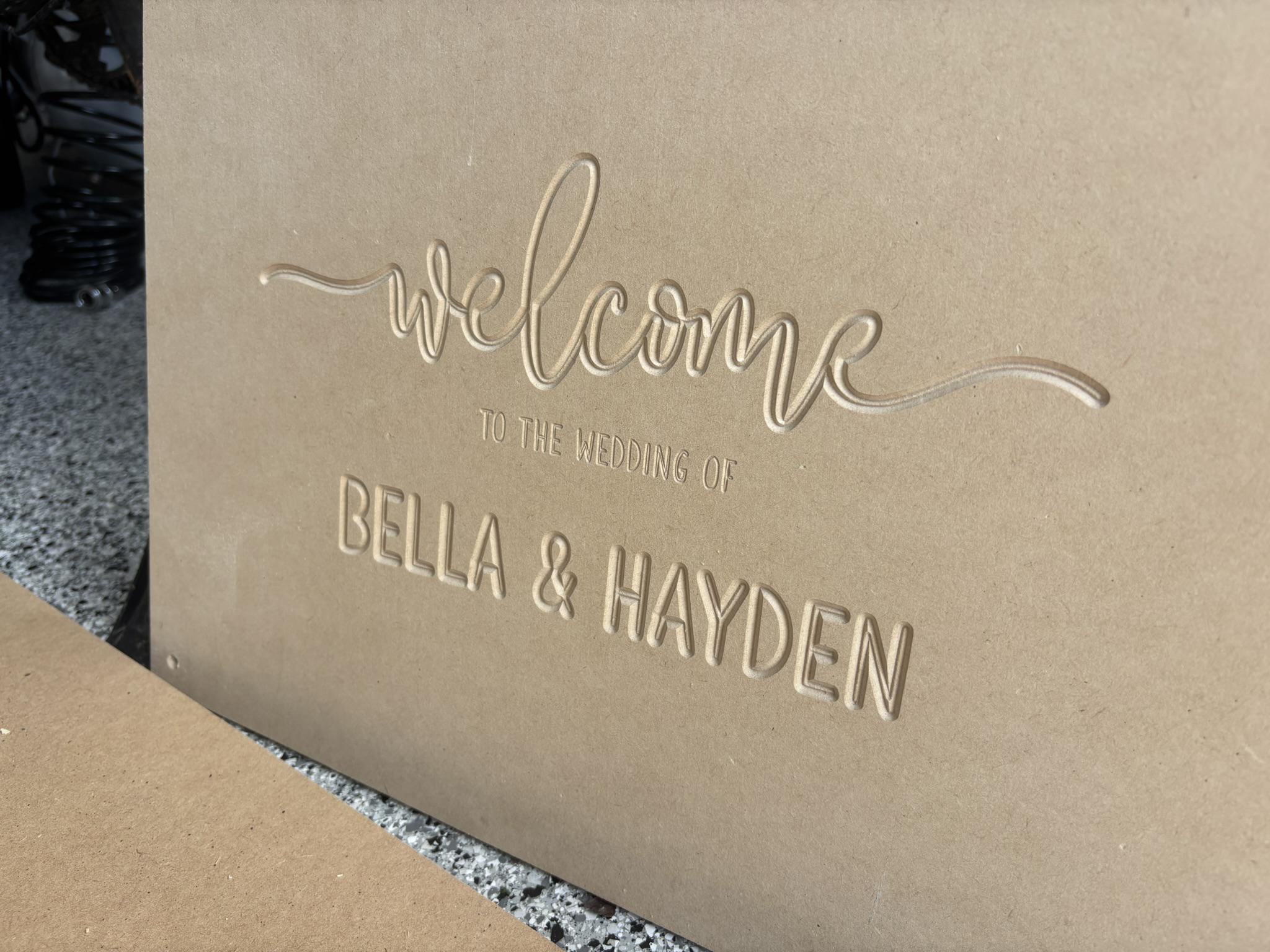
The machine is built and now in fully functional. Woohoo! I’ve also already done a job for someone. I didn’t build this to engrave signs for wedding, but turns out it can do that too - who knew!
If you’ve ever looked at a simple job and thought “I could build a machine for that”, welcome. You’re among friends. Bring your own stainless tube.